Best RV Water Pressure Regulator With Gauge: 2026 Buyer’s Guide
Hooking your RV up to a campground water supply without a pressure regulator is one of the most expensive mistakes you can make. Campground water pressure can spike to 100 PSI or higher — way above the 40-60 PSI your RV’s plumbing is designed to handle. The result is burst pipes, blown fittings, and a very bad camping trip. A good RV water pressure regulator costs $10-$50 and can save you hundreds in repairs. This guide covers everything you need to know and the best options available in 2026.
What Is an RV Water Pressure Regulator?
An RV water pressure regulator is a small device that attaches between the campground water hookup and your RV’s water inlet. It automatically reduces incoming water pressure to a safe level for your RV’s plumbing system. Most RV manufacturers recommend keeping water pressure between 40 and 60 PSI. Without a regulator, any pressure spike from the campground supply goes straight into your pipes, hoses, and fittings.
Do You Really Need One?
Yes — every time you hook up to an external water supply. Here’s why:
- Campground water pressure varies wildly — anywhere from 20 to 100+ PSI
- Most RV water systems are designed for 40-60 PSI maximum
- High pressure can damage water lines, connections, the water heater, and even the toilet fill valve
- A regulator costs $10-50 — a burst pipe repair can cost $500+
The only time you don’t need one is when you’re running on your own onboard water tank and pump. In that case your RV water pump already controls the pressure internally.
Fixed vs Adjustable RV Water Pressure Regulators
There are two main types:
Fixed Pressure Regulators
These preset the output pressure at a fixed level — typically 40 or 45 PSI. They’re simple, cheap ($10-15), and reliable. The downside is you can’t adjust them. If your RV needs higher pressure for good shower flow, a fixed regulator might not cut it.
Adjustable RV Water Pressure Regulators
Adjustable regulators let you dial in the exact pressure you want, typically between 15 and 160 PSI. They cost more ($25-50) but give you full control. If you camp at sites with low pressure and want to maximize flow, or at high-pressure sites where you need to protect your plumbing, an adjustable regulator is worth the extra cost.
Why You Should Get One With a Gauge
A pressure gauge tells you exactly what pressure is coming into your RV in real time. Without one you’re flying blind — you have no idea if the campground supply is running at 35 PSI or 95 PSI. Models with built-in gauges cost a little more but are well worth it. You’ll immediately know if a campground’s pressure is dangerously high or unusably low before it causes a problem.
Best RV Water Pressure Regulators in 2026
1. Camco RV Water Pressure Regulator with Gauge — Best Overall
Camco is the most trusted name in RV accessories and their pressure regulator with gauge is the go-to choice for most RVers. It limits pressure to a safe 40-50 PSI while the built-in gauge lets you monitor incoming pressure at a glance. Made from lead-free brass, it’s durable and NSF certified for drinking water safety. Fits any standard 3/4″ garden hose thread.

| Spec | Details |
|---|---|
| Type | Fixed |
| Output Pressure | 40-50 PSI |
| Gauge | Yes |
| Material | Lead-free brass |
| Connection | 3/4″ male/female hose thread |
| Certifications | NSF certified |
Best for: Most RVers who want a reliable, no-fuss solution with visibility into campground pressure.
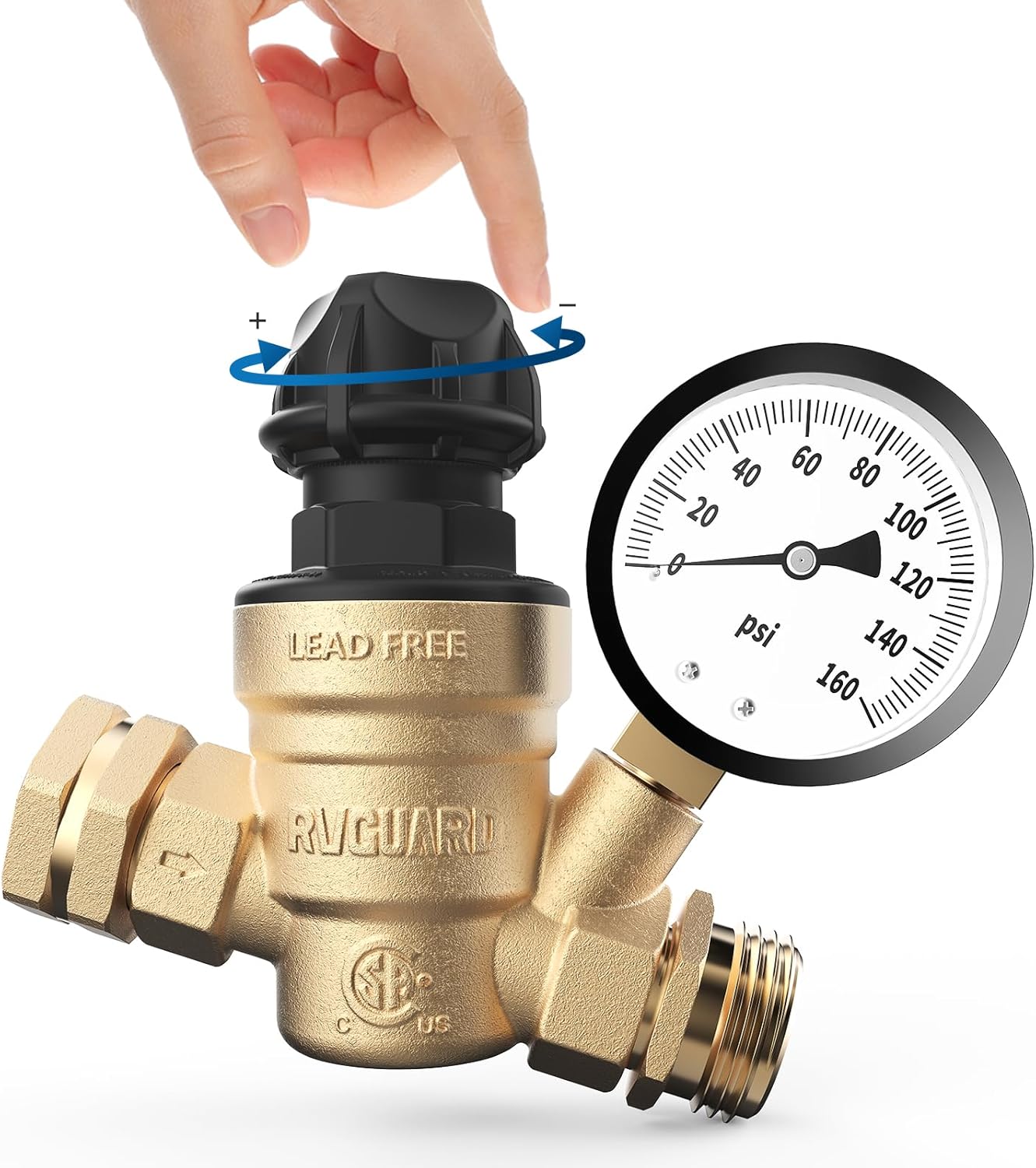
2. RVGUARD Adjustable Water Pressure Regulator — Best Adjustable
The RVGUARD adjustable regulator is our top pick if you want full control over your water pressure. You can dial it anywhere from 15 to 160 PSI using the easy-turn knob. The large pressure gauge is easy to read and the brass construction means it’ll last for years. Ideal for full-time RVers or anyone who camps at a variety of sites with unpredictable water supplies.
| Spec | Details |
|---|---|
| Type | Adjustable |
| Pressure Range | 15-160 PSI |
| Gauge | Yes — large face |
| Material | Brass |
| Connection | 3/4″ hose thread |
Best for: Full-time RVers, boondockers, or anyone who wants to fine-tune their water pressure.
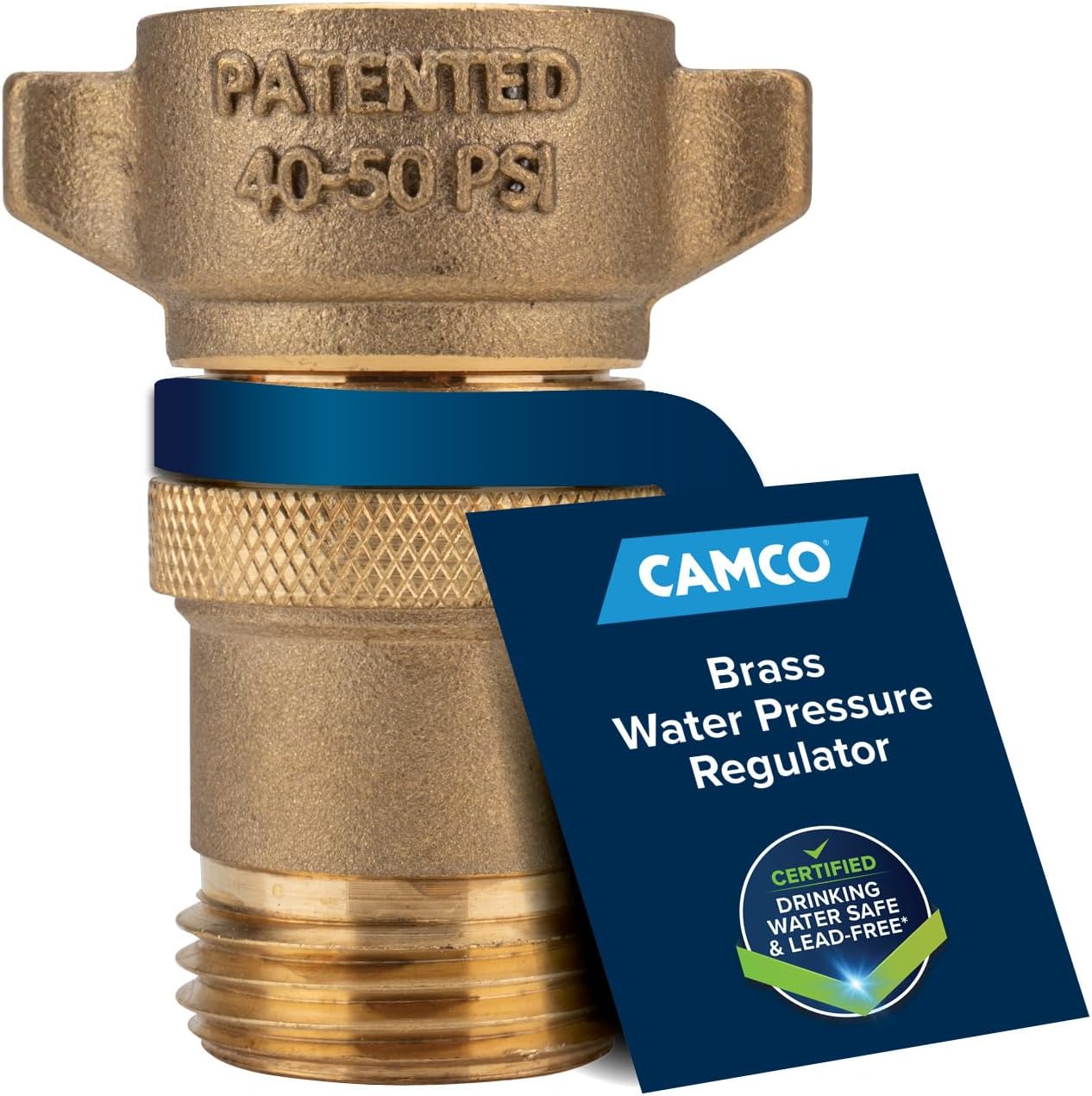
3. Camco 40055 Brass Water Pressure Regulator — Best Budget Pick
If you just need basic protection without spending much, the Camco 40055 is the classic no-frills option. No gauge, fixed at 40-50 PSI, made from lead-free brass. It’s been the standard budget pick for years and does exactly what it’s supposed to do. At under $15 it’s the easiest recommendation for occasional campers.
| Spec | Details |
|---|---|
| Type | Fixed |
| Output Pressure | 40-50 PSI |
| Gauge | No |
| Material | Lead-free brass |
| Price range | Under $15 |
Best for: Occasional campers who want basic protection at the lowest possible cost.
4. Valterra A01-1117VP Inline Pressure Regulator — Best Compact
The Valterra regulator is a compact inline option that sits directly on the water hose rather than at the spigot. It’s a fixed 45 PSI design made from durable plastic with brass fittings. The inline design keeps it out of the way and reduces stress on the spigot connection. A solid choice if you prefer a cleaner hookup setup.

| Spec | Details |
|---|---|
| Type | Fixed inline |
| Output Pressure | 45 PSI |
| Gauge | No |
| Material | Plastic body with brass fittings |
Best for: RVers who want a compact, inline solution that keeps the spigot connection clean.
How to Install an RV Water Pressure Regulator
Installation is simple and takes under a minute:
- Turn off the campground water spigot
- Thread the regulator onto the spigot — hand tight is usually enough, a quarter turn with pliers if needed
- Attach your RV water hose to the output side of the regulator
- Connect the hose to your RV’s city water inlet
- Turn the spigot on slowly and check the gauge if you have one
The regulator goes between the spigot and the hose — always on the supply side, never between the hose and the RV. If you also use an inline water filter, the regulator goes first, then the filter. This protects the filter from pressure spikes too. Speaking of which — if you’re not already filtering your campground water, see our guide to the best RV water pressure regulators and filters combined for a more complete setup.
What Pressure Should I Set My RV Regulator To?
For most RVs, 45-55 PSI is the sweet spot. Here’s a general guide:
| Pressure | What It Means |
|---|---|
| Under 30 PSI | Too low — poor shower flow, slow toilet fill |
| 40-50 PSI | Ideal for most RVs |
| 50-60 PSI | Acceptable for newer RVs with higher-rated plumbing |
| Over 60 PSI | Too high — risk of damage to fittings and hoses |
Check your RV owner’s manual for the manufacturer’s recommended maximum pressure. If you can’t find it, staying at or below 50 PSI is a safe default for any RV.
Common Problems and Questions
Why is my water pressure still too low after installing a regulator?
If pressure is low after installing a fixed regulator it’s usually one of three things: the campground supply pressure is already low coming in, the regulator is faulty, or you have a partially kinked hose. If you’re using an adjustable regulator, check the dial setting. Also check for sediment buildup in the regulator — some models have a screen that can clog over time.
Should the pressure regulator go before or after the water filter?
Always put the pressure regulator before the filter. This protects the filter housing from pressure spikes and extends filter life. The correct order is: spigot → pressure regulator → water filter → RV inlet.
Can I leave the pressure regulator on all the time?
Yes — in fact you should. Leave it connected any time you’re hooked up to an external water supply. There’s no downside to keeping it in place. Just remember to bring it with you when you disconnect — they’re easy to leave behind at the spigot.
How long do RV water pressure regulators last?
A quality brass regulator can last 5-10 years with normal use. Plastic models tend to degrade faster, especially in UV exposure. Inspect yours annually for cracks, corrosion, or stiffness in the adjustment knob. Replace it if you see any signs of wear — at $15-50 it’s not worth risking your plumbing over.
RV Water Pressure Regulator vs RV Water Filter — Do You Need Both?
They do completely different things. A pressure regulator controls the force of the water. A water filter removes contaminants like chlorine, sediment, bacteria, and heavy metals. You need both for a complete setup — one protects your plumbing, the other protects your health. If you’re serious about water quality on the road, also consider whether a dedicated RV water filter makes sense for your setup.
Conclusion
An RV water pressure regulator is one of the cheapest and most important pieces of gear you can carry. For most RVers the Camco regulator with gauge is the best all-round choice — it’s proven, affordable, and gives you real-time pressure monitoring. If you want more control, step up to the RVGUARD adjustable model. Either way, don’t hook up to a campground supply without one.
| Regulator | Type | Gauge | Best For |
|---|---|---|---|
| Camco with Gauge | Fixed | Yes | Most RVers — best overall |
| RVGUARD Adjustable | Adjustable | Yes | Full-timers, variable sites |
| Camco 40055 | Fixed | No | Budget pick, occasional campers |
| Valterra Inline | Fixed inline | No | Clean compact hookup |
Disclosure: As an Amazon Associate, I earn from qualifying purchases.